In today’s technology-driven world, children spend more time in front of screens than ever before. While digital learning has its advantages, extracurricular activities play an equally important role in a child’s overall development. Among these activities, classical dance stands out as one of the most enriching art forms because it combines physical fitness, emotional expression, cultural education, and disciplined learning into a single experience.
At Patitapawan Kala Niketan, classical dance is more than learning graceful movements. It is a journey that nurtures confidence, creativity, respect for tradition, and lifelong values. Through structured training and artistic expression, children develop skills that positively influence every aspect of their lives.
What Is Classical Dance?
Classical dance is one of India’s most treasured cultural traditions, representing centuries of artistic excellence, storytelling, devotion, and discipline. Dance forms such as Bharatanatyam, Odissi, Kathak, Kuchipudi, Mohiniyattam, Manipuri, Kathakali, and Sattriya are recognized for their rich heritage and structured techniques.
Each movement, expression, rhythm, and gesture carries meaning, allowing dancers to communicate emotions and stories without words. Learning classical dance helps children appreciate India’s cultural heritage while developing artistic excellence from an early age.
Developing Confidence Through Performance
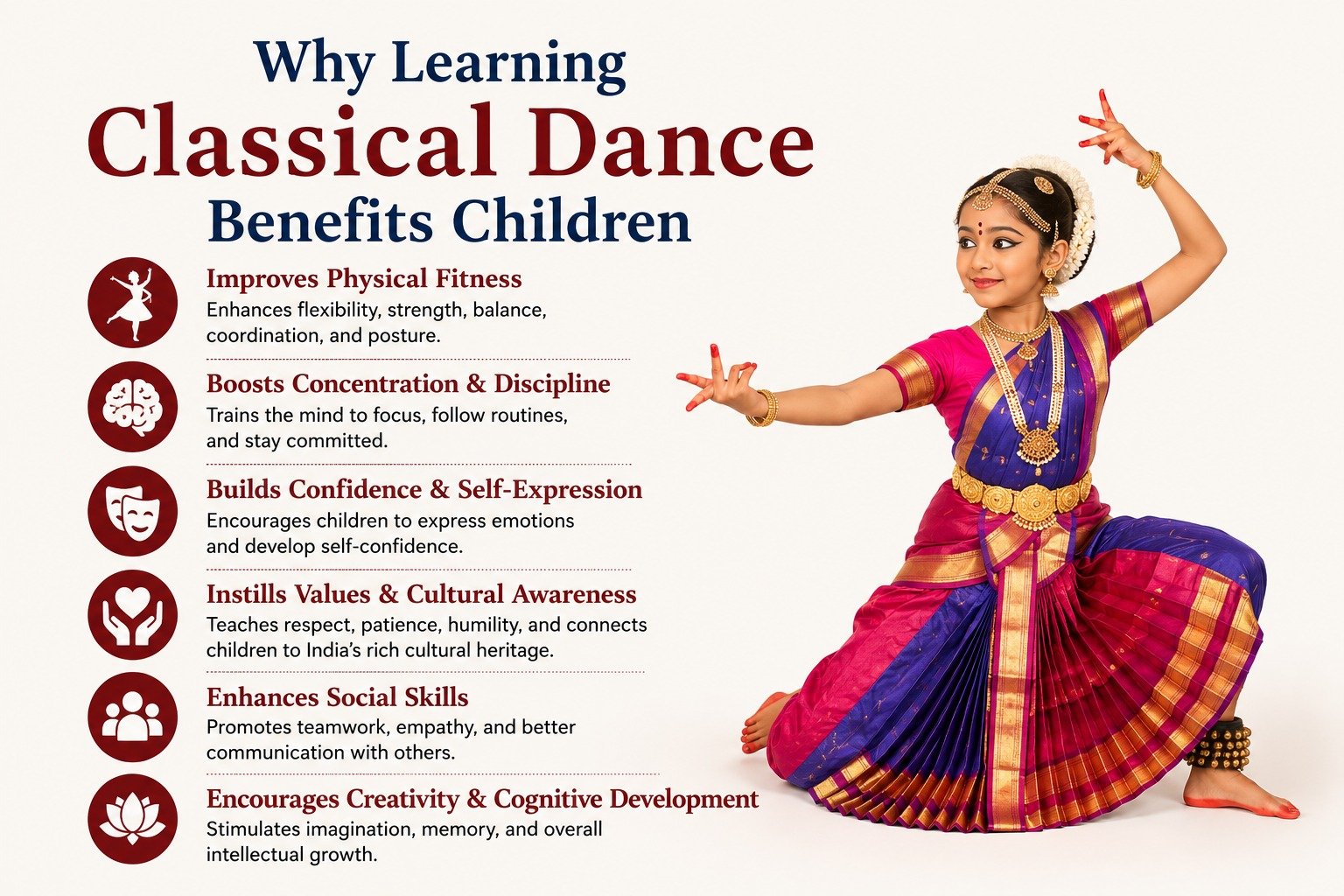
One of the greatest benefits of classical dance is the confidence it builds in children. Performing before teachers, parents, and audiences helps children overcome stage fear and become comfortable expressing themselves in public.
Every rehearsal, recital, and cultural event strengthens self-belief. As children master new techniques and receive appreciation for their performances, they develop the confidence to take on new challenges both inside and outside the classroom.
This confidence often translates into improved communication skills, stronger leadership qualities, and greater academic participation.
Teaching Discipline and Dedication
Classical dance requires patience, consistency, and regular practice. Students learn that success is achieved through commitment rather than shortcuts.
Children gradually develop time management skills as they balance school, dance practice, and personal responsibilities. They understand the importance of respecting teachers, following instructions, maintaining proper posture, and continuously improving their performance.
These habits become valuable life skills that benefit them throughout their education and future careers.
Improving Physical Health and Coordination
Classical dance provides excellent physical exercise while making learning enjoyable. The various movements improve flexibility, posture, balance, coordination, stamina, and muscle strength.
Regular dance practice also enhances body awareness and promotes healthy physical development. Unlike routine workouts, classical dance keeps children engaged through music, rhythm, and storytelling, making exercise both meaningful and enjoyable.
It also supports healthy growth by encouraging proper breathing techniques and controlled body movements.
Enhancing Creativity and Emotional Expression
Every child has emotions, ideas, and imagination waiting to be expressed. Classical dance provides a creative outlet where children learn to communicate feelings through facial expressions, hand gestures, and graceful movements.
Storytelling is an essential element of classical dance. By portraying different characters and emotions, children develop empathy, imagination, and emotional intelligence.
This creative expression helps children become more confident in sharing their thoughts while improving their overall communication abilities.
Strengthening Concentration and Memory
Learning classical dance involves remembering intricate footwork, hand gestures, facial expressions, rhythms, and choreography. This process naturally improves memory, concentration, and cognitive skills.
Children become more attentive as they learn to synchronize movements with music while maintaining proper timing and expressions.
These mental benefits often contribute to improved classroom performance, better focus during studies, and enhanced problem-solving abilities.
Connecting Children with Indian Culture
Classical dance introduces children to India’s rich traditions, mythology, literature, and spiritual heritage. Through dance, they learn stories from ancient scriptures, historical legends, and cultural celebrations that have shaped Indian civilization for centuries.
This cultural connection helps children develop pride in their heritage while encouraging respect for different traditions and communities.
At Patitapawan Kala Niketan, preserving cultural values is an important part of every student’s artistic journey.
Building Social Skills and Teamwork
Dance classes create opportunities for children to interact with peers who share similar interests. They learn the importance of cooperation during group performances, rehearsals, and cultural events.
Working together towards a common performance teaches responsibility, respect, patience, and teamwork. These experiences help children build meaningful friendships and develop strong interpersonal skills.
Such qualities become increasingly valuable as children grow into responsible members of society.
Supporting Overall Personality Development
Classical dance contributes to a child’s complete personality development by combining physical fitness, emotional intelligence, artistic creativity, and cultural awareness.
Children who participate in dance often demonstrate greater confidence, discipline, resilience, communication skills, and emotional maturity. These qualities help them succeed not only in academics but also in leadership roles, social interactions, and future professional careers.
The lessons learned through dance continue to benefit them throughout their lives.
Why Choose Patitapawan Kala Niketan for Classical Dance?
Patitapawan Kala Niketan is dedicated to preserving India’s classical arts while nurturing the talents of young learners. The institution provides experienced guidance, structured training, and a supportive environment where children can develop both technically and personally.
Students receive opportunities to perform on stage, participate in cultural programs, and deepen their understanding of India’s artistic traditions. Every class focuses on discipline, creativity, confidence, and respect for cultural heritage.
Parents can trust that their children are receiving not only quality dance education but also valuable life lessons that shape character and inspire lifelong learning.
Conclusion
Learning classical dance offers children much more than artistic skills. It develops confidence, discipline, creativity, physical fitness, emotional intelligence, cultural awareness, and social responsibility. These qualities prepare children to face life’s challenges with grace, resilience, and self-belief.
At Patitapawan Kala Niketan, every dance lesson is an opportunity to preserve tradition while inspiring the next generation of artists and responsible citizens. By encouraging children to embrace classical dance today, we help them build a brighter, more confident, and culturally connected future.
Frequently Asked Questions (FAQs)
At what age can children start learning classical dance?
Most children can begin learning classical dance between the ages of 5 and 7, although the ideal age may vary depending on the child’s interest, coordination, and readiness.
How does classical dance help in a child's development?
Classical dance improves confidence, discipline, concentration, creativity, physical fitness, emotional expression, and cultural awareness, contributing to overall personality development.
Which classical dance forms are suitable for children?
Popular options include Bharatanatyam, Kathak, Odissi, Kuchipudi, Mohiniyattam, and Manipuri. The best choice depends on the child’s interests and the guidance provided by experienced instructors.
Does learning classical dance improve academic performance?
Yes. Classical dance enhances concentration, memory, time management, and discipline, which often support better academic performance and learning habits.
Why should parents choose Patitapawan Kala Niketan for classical dance training?
Patitapawan Kala Niketan provides expert guidance, structured training, cultural education, stage performance opportunities, and a nurturing environment that helps children grow into confident, disciplined, and culturally aware individuals.